
Introduction
Open a social app and you’ll see a glittering parade of the “it” bag, the ballet flat everyone suddenly owns, and a rotating cast of looks that appear… eerily identical. That sameness can be soothing—if you’re tired, copying what’s in front of you is efficient. But it can also be numbing. When your feed decides your taste, you end up with a closet built for the algorithm, not for your life.
Personal style is the antidote. It’s not about rejecting trends or spending more; it’s about knowing yourself so clearly that getting dressed becomes energizing, not exhausting. Real style is a relationship—between your body and your clothes, your values and your calendar, your mood and your message. When you cultivate that relationship, shopping gets easier, your outfits make sense, and your presence feels unmistakably you.
This guide blends big-picture ideas with concrete steps so you can move from inspiration overload to everyday confidence—without wasting money, time, or your individuality.
Fashion vs Style Know the Difference
- Fashion is collective and commercial. It’s what’s new, what’s sold, what’s trending. Fashion changes by design. It’s useful—but only if you know what serves you.
- Style is individual and enduring. It’s the visual language of your identity. Style doesn’t require a specific price point, size, age, or trend cycle. Style says, “This is me,” even before you speak.
When you confuse the two, getting dressed becomes a moving target. When you anchor in style first, fashion becomes a spice rack: you add what enhances the dish you’re already cooking.
Why Personal Style Matters Confidence Self-Worth
Clothing can be a quiet form of self-acceptance. When what you wear aligns with who you are and how you want to feel, you carry yourself differently—shoulders back, voice steady, eyes up. That confidence isn’t vanity; it’s clarity.
Self Expression Identity
Style communicates values without a word. Minimalists broadcast restraint and precision; maximalists telegraph playfulness and bravado. Your choices—silhouettes, textures, accessories—compose a visual statement about what matters to you.
Professional Impact
A considered appearance signals respect for people and context. You don’t need a trend memo; you need cohesion. Polished choices suggest reliability, leadership, and readiness. The goal isn’t stiff; it’s intentional.
Emotional Well-Being
There’s a reason many of us feel better after “getting dressed” even on a low day. Clothes can cue the mind—a principle often described as enclothed cognition. The right outfit can lessen decision fatigue and create a small island of control.
Community Connection
Style starts conversations. Compliments on a jacket, a shared love of a designer, the courage to try color—these build micro-connections that make daily life richer.
Mindful Consumption
Knowing your style reduces impulse buys. You invest in pieces that earn their keep, repair and rewear what you love, and create a wardrobe that feels like you—today and five years from now.
Principles of Authentic Style
- Curiosity over conformity. Use trends to learn what you like, not to earn approval.
- Evidence over fantasy. Your closet should serve your actual life, not a fictional itinerary.
- Iteration over instant identity. Style evolves. Let it.
- Inclusion over gatekeeping. Great style is ageless, size-less, and budget-agnostic.
- Sustainability over churn. Buy less, choose well, care more.
- Joy over performance. Wear what makes you feel vivid—not just what photographs well.
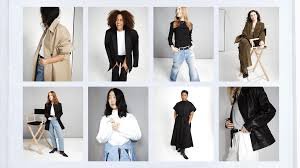
Real people embody these principles every day. Think of the joyful Americana of Jalil Johnson, the vibrant, age-defying boldness of Renia Jaz, or the analytic, humorous approach Heather Hurst uses to examine why she owns what she owns. Different ages, tastes, and contexts—same throughline: dressing to feel like themselves.
Craft Your Style Statement
A Style Statement is your wardrobe’s mission statement. It keeps you honest at the rack, the cart, and the mirror.
Template (fill in the blanks):
- How I want to feel in my clothes: (e.g., calm, capable, playful, magnetic)
- How I want to be perceived: (e.g., creative, trustworthy, modern, warm)
- My keywords (5–7): (e.g., relaxed, polished, architectural, tactile, unfussy)
- Silhouette preferences: (e.g., structured shoulders + fluid bottoms; cropped tops + high-rise pants)
- Color notes: (e.g., olive + cream core; heat with poppy red; avoid dusty pastels)
- No-go’s: (e.g., itchy fabrics, body-con dresses, fussy closures)
- Always-yes signatures: (e.g., wide-leg denim, gold hoops, square-toe boots)
Method to Find Your Style Identify Your Wardrobe MVPs
Pull the 10–15 pieces you actually wear. Not loungewear—life wear. Notice patterns:
- Do you always grab wide-leg trousers? Oversized button-ups? Midi dresses?
- What fabrics repeat—denim, ponte, silk, chunky knits?
- What footwear makes outfits “click”—sleek sneakers, ankle boots, block heels?
Fit Form Body Data
Clothes don’t “fix” bodies; they harmonize with them. Gather data:
- Measure bust, waist, hip, inseam, shoulder width, sleeve length.
- Note proportions: longer torso? short rise? broader shoulders than hips?
- Identify comfort thresholds: where you like garments to sit, how structured you tolerate, your ideal hem and sleeve lengths.
Claim Your Signature Pieces
Signatures are repeating elements that make outfits feel like you: a Bardot neckline, a pillbox hat, a full skirt, a black turtleneck, a chunky loafer, a particular earring shape.
Exercise: List 3–5 signatures you already wear. Commit to featuring one in most outfits. Over time, add one aspirational signature that delights you.
Calibrate Your Color Compass
Colors aren’t moral; they’re tools. Create a palette with roles:
- Core Neutrals: 2–3 shades you’ll wear head-to-toe (e.g., navy, cream, charcoal).
- Support Neutrals: 1–2 that play nicely (e.g., olive, camel).
- Energizers: 2–3 accents that lift everything (e.g., cobalt, poppy, chartreuse).
- Complexion Watch-outs: hues that wash you out or need careful pairing.
Experiment Then Iterate
Treat style like a lab:
- Try a new proportion (e.g., big-top + slim-bottom or the reverse).
- Wear that “special” skirt on a Tuesday.
- Document outfits for two weeks; star the ones that made you feel alive.
Rule: If a look excites you but feels risky, test-drive it in low-stakes settings first. Confidence grows with reps.
Build a Mood Board the Smart Way
Mood boards work if you feed them variety.
Do this:
- Collect 30 images across decades, sizes, genders, and aesthetics—runway shots, film stills, street style, interiors, album covers.
- Tag what you love: boxy blazer, knife pleat, square toe, cognac leather, matte black hardware, column dress, Breton stripe.
- Cull duplicates. Keep recurring shapes and textures, not just complete outfits.
Edit Your Closet with Intention
A good edit saves money and restores joy.
Three-pile method:
- Keep (fits, loved, worn often): integrate into outfits immediately.
- Tailor (80% there): sleeves, hems, waist nips. Small tweaks = huge payoff.
- Release (doesn’t serve the statement): consign, donate, swap.
Shopping guardrails:
- “Will this replace or elevate an outfit I already wear?”
- “Will I want to reach for it 20 times this season?”
- “Does it play with at least three other items I own?”
If you can’t answer yes to two of the three, it’s a pass.
Dressing Through Life Transitions
New job, new city, new baby, new body, new chapter—your wardrobe should adapt with you.
- Name the new role. What do you want to signal—authority, approachability, creativity?
- Bridge pieces. Add 3–5 items that translate your old closet into the new context: a tailored blazer, elevated sneaker, refined knit dress, structured tote, versatile coat.
- Ritualize the shift. Choose a “threshold” outfit for big days—a look you trust that mentally clicks you into the next level.
- Future-self filter. When choosing pieces, ask, “Would the version of me I’m growing into wear this?” If yes, it earns hanger space.
Style in the Social Era

Your feed can either flatten your taste or expand it.
- Diversify inputs. Follow creators outside your age, size, and location; include costuming, vintage, and global fashion weeks.
- Active consumption. Save images for elements you love (a lapel shape, a hem movement), not direct copies.
- One-in, one-out rule for trends. If you try the micro-trend shoe, retire a pair you never reach for.
- Creator mindset. Dress for your life first; if it happens to photograph beautifully, bonus.
14 Day Style Reboot Plan
Day 1: Write your Style Statement.
Day 2: Pull your 10 Wardrobe MVPs; identify the pattern.
Day 3: Take measurements; note proportions and comfort rules.
Day 4: Build your color compass (core, support, energizers).
Day 5: Define 3 signatures you already wear.
Day 6: Outfit lab #1—swap your usual proportion (big-top/sleek-bottom or vice versa).
Day 7: Edit: remove 10 obvious “nope” items.
Day 8: Tailor list—pin and photograph what a hem or nip could fix.
Day 9: Mood board curation—30 images, tag the elements, distill 5 recurring themes.
Day 10: Capsule test—assemble 10 mix-and-match pieces for the week ahead.
Day 11: Outfit lab #2—introduce one energizer color in a small accessory.
Day 12: Shop your closet—create 3 “new” looks using only what you own.
Day 13: Mindful add—if a true gap exists, purchase 1 high-impact piece that honors your statement.
Day 14: Photograph 7 looks you loved; create an album titled “Wear Again.”
Common Pitfalls
- Pitfall: Buying a whole trend wardrobe.
Fix: Try the silhouette in one mid-range piece first; prove it works with three outfits. - Pitfall: Closet full of “almosts.”
Fix: Budget for tailoring. Tiny alterations transform maybes into forever pieces. - Pitfall: Saving favorites for “special.”
Fix: Tuesday is special. Put the silk skirt under a sweatshirt; wear the statement earrings with denim. - Pitfall: Color confusion.
Fix: Anchor outfits in a neutral column (e.g., cream top + cream trouser) and add one energizer via shoe/bag/scarf. - Pitfall: Photogenic but uncomfortable.
Fix: Set non-negotiables (breathable fabric, walkable heel height, smooth waistbands). If it hurts, it won’t get worn. - Pitfall: Analysis paralysis.
Fix: Pre-build 5 uniforms (e.g., blazer + tee + wide-leg; knit dress + boots; button-up + jeans + loafer). Rotate, don’t reinvent.
Table of Contents
Conclusion: Dress for a Life You Own
Introduction: Escaping the Sameness Trap
Fashion vs. Style: Know the Difference
Why Personal Style Matters
3.1 [Confidence & Self-Worth]
3.2 [Self-Expression & Identity]
3.3 [Professional Impact]
3.4 [Emotional Well-Being]
3.5 [Community & Connection]
3.6 [Mindful Consumption]
The 7-Step Method to Find Your Style
Step 1 – Wardrobe MVPs
Step 2 – Fit, Form & Body Data
Step 3 – Signature Pieces
Step 4 – Color Compass
Step 5 – Experiment, Then Iterate
Step 6 – Build a Mood Board (the smart way)
Step 7 – Edit Your Closet with Intention
Dressing Through Life Transitions
Style in the Social Era: Use the Algorithm—Don’t Let It Use You
Common Pitfalls (and Quick Fixes)
Conclusion
Style is not a test you pass; it’s a conversation you keep having with yourself. When you stop outsourcing your taste to the feed and start listening to your preferences, everything clicks. You don’t need more clothes; you need clearer criteria. You don’t need a different body; you need better data and kinder expectations. You don’t need to be “fashionable” in the collective sense; you need to be recognizably you.Use the Style Statement to steer purchases and pairings. Build on your Wardrobe MVPs. Claim your signatures. Edit often, tailor without guilt, and let your closet evolve as your life does. Follow diverse inspirations, but return to your mirror for the final say.Dress like you mean it—not to impress strangers, but to support the person you’re becoming. When your clothes align with your identity, you move through the world with more ease, more integrity, and more joy. And that, more than any trend, never goes out of style.